NADHI — A Film by Aditya Vempaty
Mid-20th century, rural South India. Deep in the forest, the last of an ancient tribe tenuously holds onto its way of life amid the construction of a dam and the onset of a crushing drought. Shankar, their leader, fights to recover what is quickly eroding away as disturbances take root within his village and life in the world outside promises his people an escape.
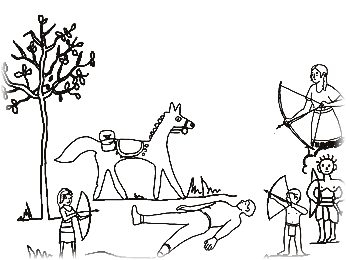
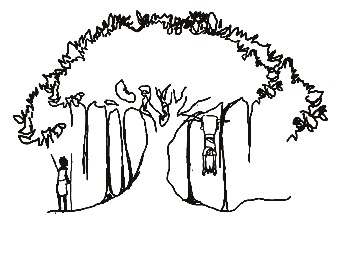
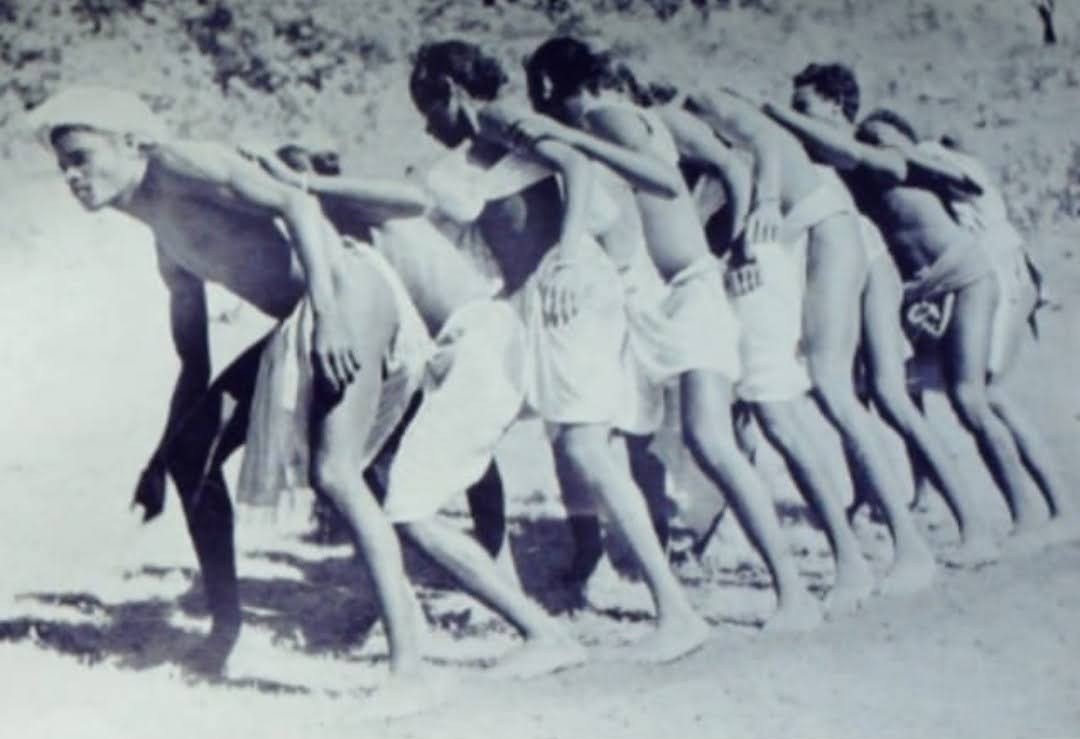
Scenes from the tribe's mythology:




World of Nadhi నేపథ్యం
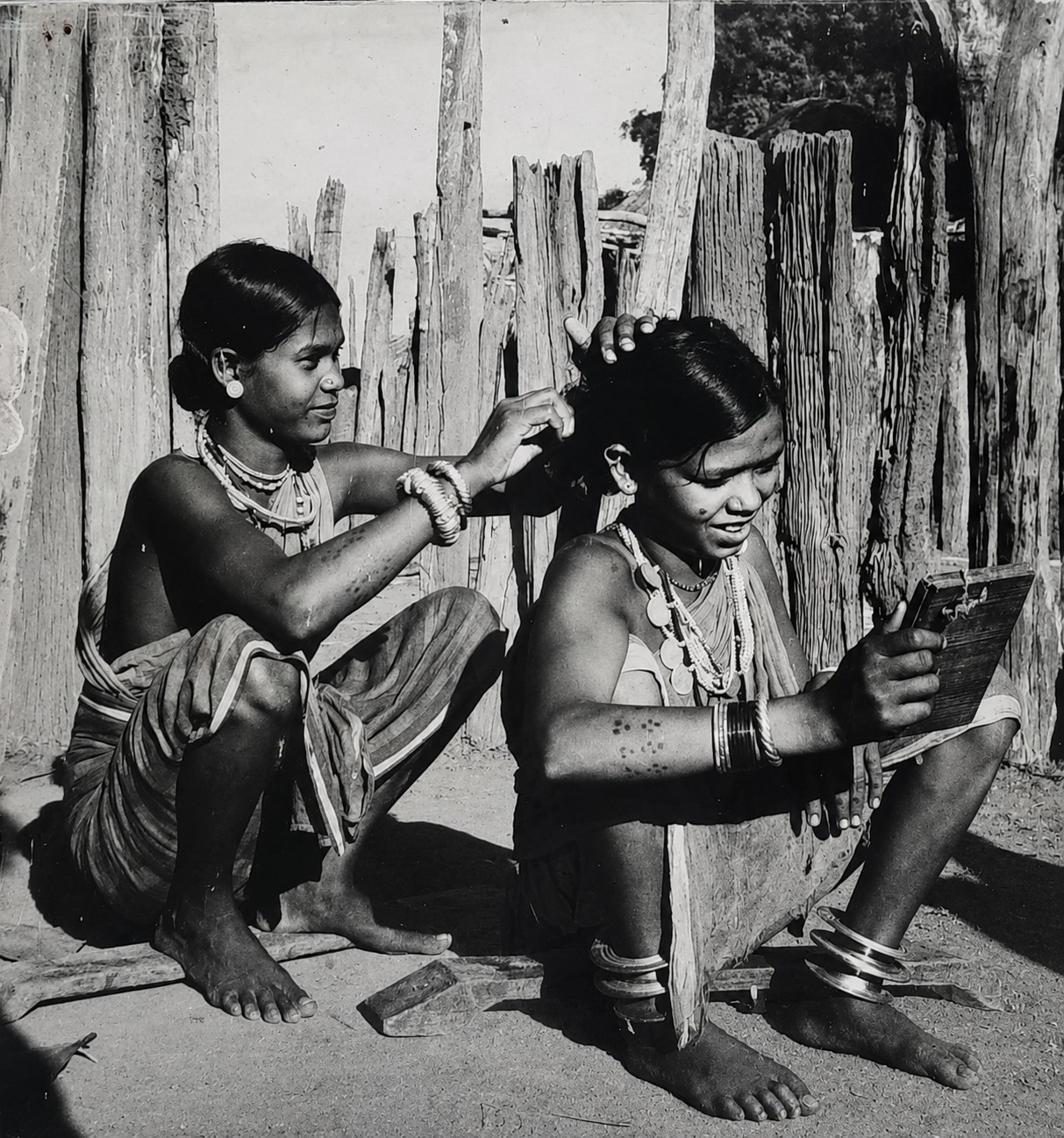
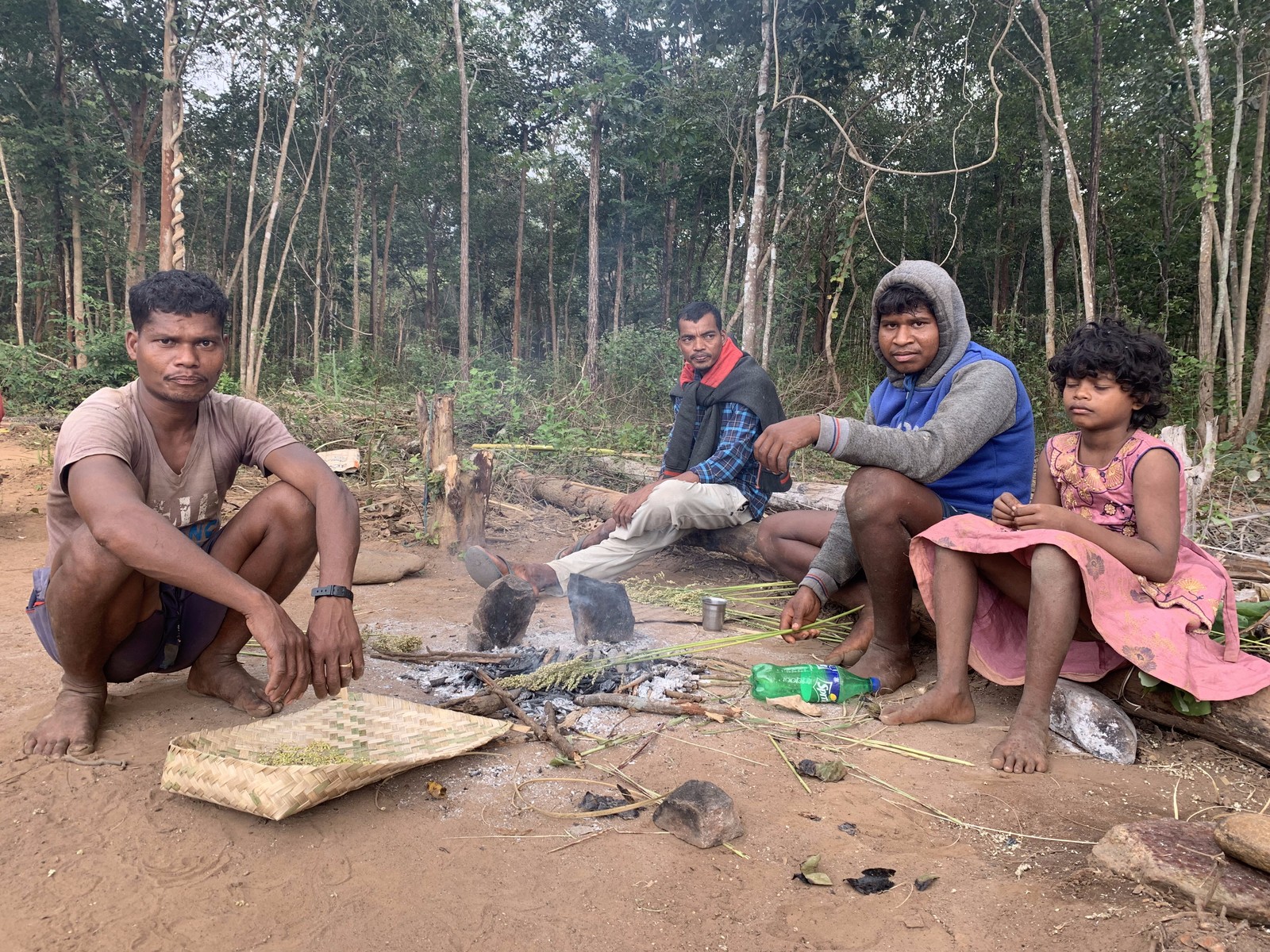
While the film’s setting does not make any reference to an exact time, place, or people, its world was built from the culture, history, and experiences of the Koya people of the Eastern Ghats in South India, who had an active hand in developing the story.
A Meeting of Two Worlds
Tribal people of India, called Adivasis (literally, first inhabitants), have actively participated in India's long-standing intra-migration patterns and exchange of material objects, cultural iconography, and religious thought. Despite the Koyas primarily inhabiting the Eastern Deccan plateau far from the coast, cowries (shells of sea snails) feature prominently in their ceremonial wares, just as yak tail-hair brushes are found in South Indian temples on the opposite side of the Indian subcontinent from the yak's habitat in the far reaches of the Himalayas. The word “Mara”, meaning tree in the Koya language, is believed to be a cognate of the name of Rama, the mythological hero of the eponymous Ramayana, one of the two ancient foundational epics of Indian culture, tracing its origins to the early 1st millennium BCE. Local legend purports Rama to have spent his exile in the once dense forests of the Koya heartland.
Further examination of the texts reveals a striking dichotomy between the Koya pantheon and that of popular Hinduism, analogous to the phenomenon that scholars assert led to a schism between ancient Zoroastrianism (Iranian religion pre-dating Islam) and Hinduism. Each began to view the other’s devathas (celestial beings) as their own rakshasas (demons). The Sabari river, a critical lifeline for the Koya, is similarly named after a tribal woman devoted to Rama whom Indians adopted as an exemplar of piety, faithfulness, and service. Over time, retellings of the Ramayana portrayed her as overcoming her tribal birth upon witnessing Rama during his exile in the forest, then attaining salvation upon her self-immolation.
Early in the Mahabharata, India’s other foundational epic, Hidimbi, a demoness whom Koyas believe was one of their own, mothers a son of the Pandava prince Bhima during a brief tryst in the forest, and warns the Pandava princes of her brother’s murderous intentions. Koya legend adds that along with her son, she conceives the sacred, ever-propagating seed that grants the Koyas their sustenance with its cultivation; Hidimbi is thus enshrined in the Koya pantheon as a goddess, whereas the outside world reduces her to little more than a demoness surrogate mother.
These two appropriations of shared mythological features from the Koya homeland illuminate a pervasive culture of the outside world demonizing tribal culture and identity, from which the only escape is abandoning the tribal way of life. Early on in the film’s development, we felt an urge to reclaim tribal mythology; it became central to the story’s construction. The village sees its current hardship as a continuation of its mythological origins. Yet, as circumstances grow more dire, the villagers question whether the certain liberation promised by their myths truly exists, and begin to believe it may only be found elsewhere.
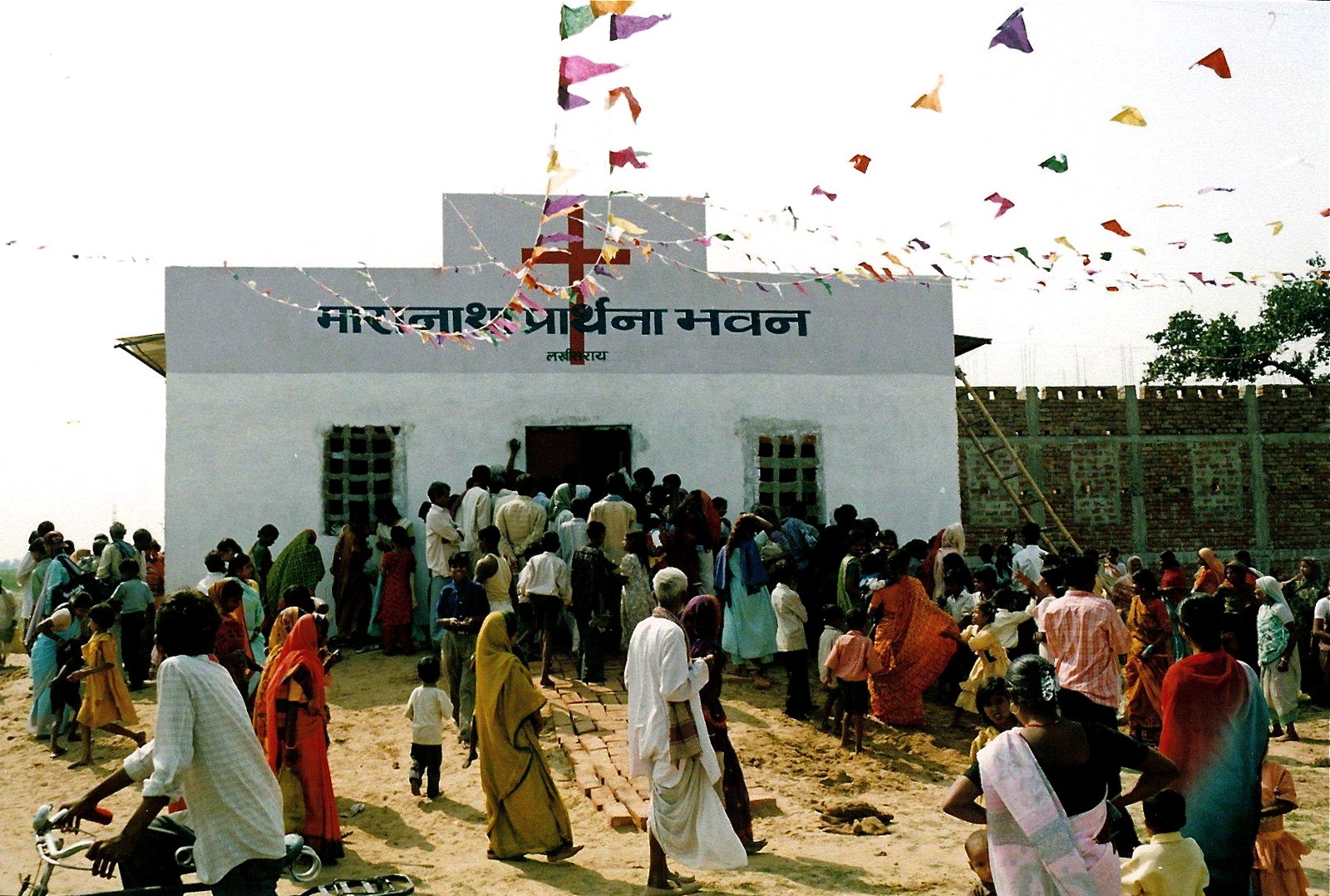
Modernity’s encroachment has forced tribal people to choose between maintaining seclusion to practice their culture without fear of denigration, or adapting to the culture of the world outside. In recent decades, the introduction of Christianity to these regions has exacerbated this pressure. Christianity, whose intrinsic allure is validated as the religion of the West, has found broad appeal amongst tribal and lower caste communities, not unlike how adopting Islam offered lower caste Hindus an escape from persecution at the hands of the upper castes in the early 2nd millennium. Mass conversion to Christianity has drawn the ire of the non-tribal Hindu majority all the more, leaving tribals with little possibility of being accepted.
This conflict between one’s faith in their traditional beliefs and the pressure to assimilate into the modern world is at the core of the film.
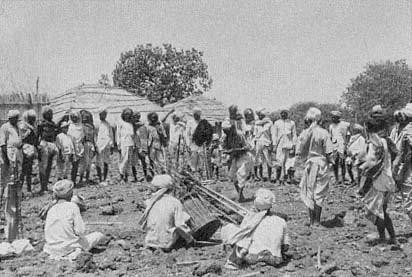

A Meeting of Two Worlds
Tribal people of India, called Adivasis (literally, first inhabitants), have actively participated in India's long-standing intra-migration patterns and exchange of material objects, cultural iconography, and religious thought. Despite the Koyas primarily inhabiting the Eastern Deccan plateau far from the coast, cowries (shells of sea snails) feature prominently in their ceremonial wares, just as yak tail-hair brushes are found in South Indian temples on the opposite side of the Indian subcontinent from the yak's habitat in the far reaches of the Himalayas. The word “Mara”, meaning tree in the Koya language, is believed to be a cognate of the name of Rama, the mythological hero of the eponymous Ramayana, one of the two ancient foundational epics of Indian culture, tracing its origins to the early 1st millennium BCE. Local legend purports Rama to have spent his exile in the once dense forests of the Koya heartland.
Further examination of the texts reveals a striking dichotomy between the Koya pantheon and that of popular Hinduism, analogous to the phenomenon that scholars assert led to a schism between ancient Zoroastrianism (Iranian religion pre-dating Islam) and Hinduism. Each began to view the other’s devathas (celestial beings) as their own rakshasas (demons). The Sabari river, a critical lifeline for the Koya, is similarly named after a tribal woman devoted to Rama whom Indians adopted as an exemplar of piety, faithfulness, and service. Over time, retellings of the Ramayana portrayed her as overcoming her tribal birth upon witnessing Rama during his exile in the forest, then attaining salvation upon her self-immolation.
Early in the Mahabharata, India’s other foundational epic, Hidimbi, a demoness whom Koyas believe was one of their own, mothers a son of the Pandava prince Bhima during a brief tryst in the forest, and warns the Pandava princes of her brother’s murderous intentions. Koya legend adds that along with her son, she conceives the sacred, ever-propagating seed that grants the Koyas their sustenance with its cultivation; Hidimbi is thus enshrined in the Koya pantheon as a goddess, whereas the outside world reduces her to little more than a demoness surrogate mother.
These two appropriations of shared mythological features from the Koya homeland illuminate a pervasive culture of the outside world demonizing tribal culture and identity, from which the only escape is abandoning the tribal way of life. Early on in the film’s development, we felt an urge to reclaim tribal mythology; it became central to the story’s construction. The village sees its current hardship as a continuation of its mythological origins. Yet, as circumstances grow more dire, the villagers question whether the certain liberation promised by their myths truly exists, and begin to believe it may only be found elsewhere.
Modernity’s encroachment has forced tribal people to choose between maintaining seclusion to practice their culture without fear of denigration, or adapting to the culture of the world outside. In recent decades, the introduction of Christianity to these regions has exacerbated this pressure. Christianity, whose intrinsic allure is validated as the religion of the West, has found broad appeal amongst tribal and lower caste communities, not unlike how adopting Islam offered lower caste Hindus an escape from persecution at the hands of the upper castes in the early 2nd millennium. Mass conversion to Christianity has drawn the ire of the non-tribal Hindu majority all the more, leaving tribals with little possibility of being accepted.
This conflict between one’s faith in their traditional beliefs and the pressure to assimilate into the modern world is at the core of the film.
Rivers Changing Course
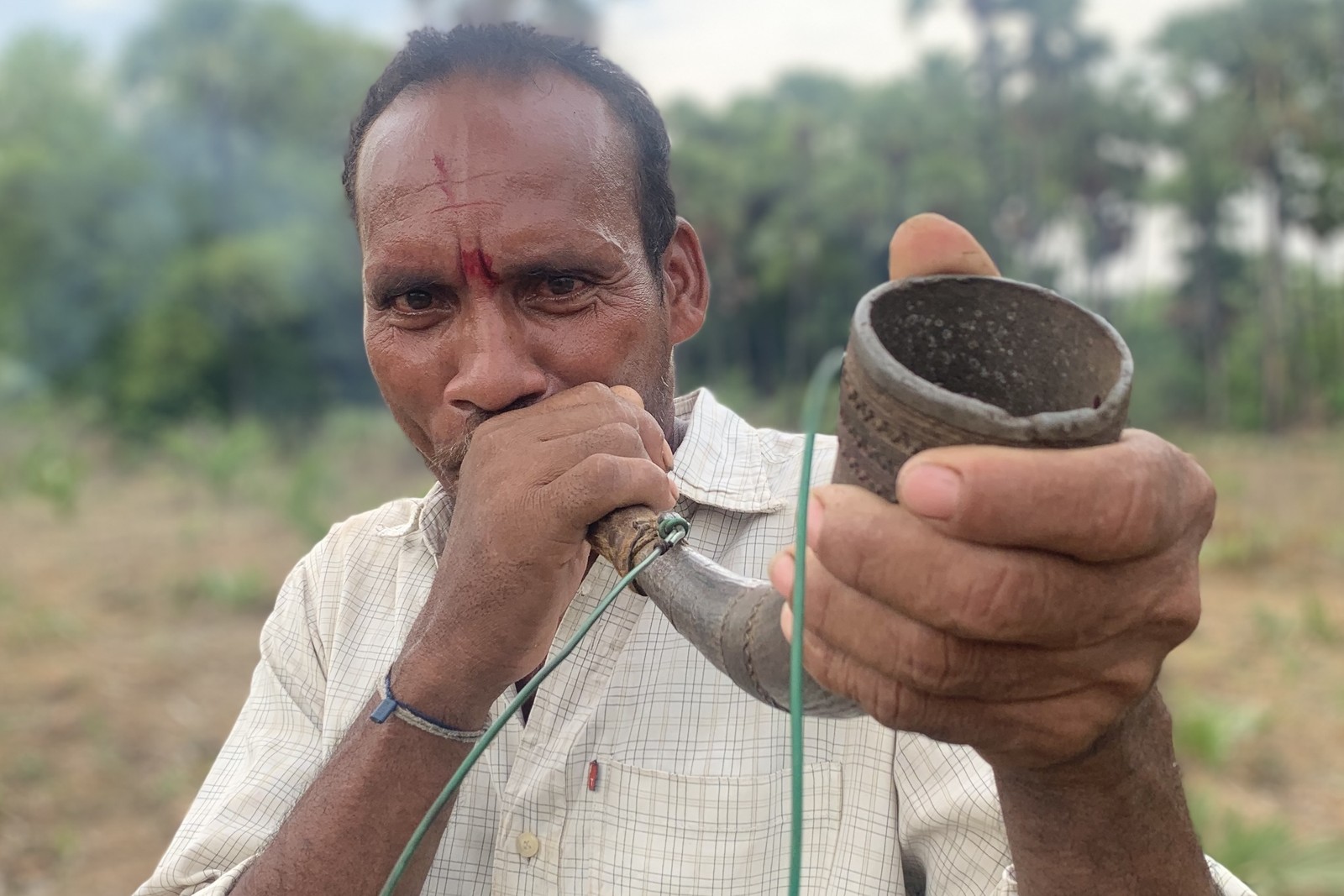
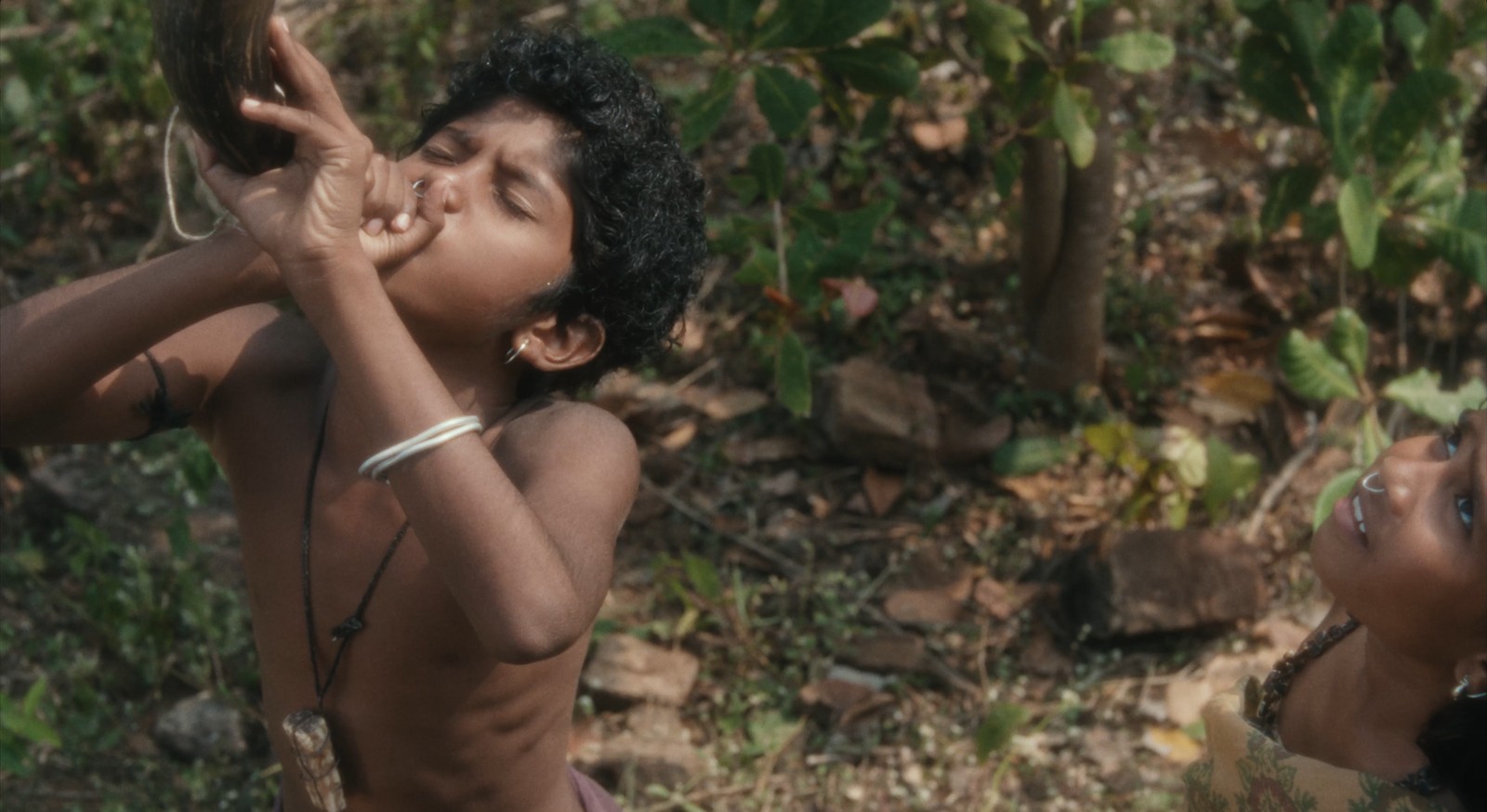
The Koyas experience the passage of time with the coming and going of the rains, animals, and celestial bodies. We understand rain and drought as atmospheric phenomena, while they believe them to be an indication of divine will. The horn of the massive gaur, a sacred object for the Koyas, is blown during prayers before the monsoon for good rain. In specific places known to them, blowing also causes raindrops to fall from the sky due to its sound’s unique reverberations along the trees and mountains. Many of the Koyas’ beliefs are situated at this juncture of superstition and scientific basis. These apparent miracles are a recurring motif in the story.
The osprey, a fish-hunting raptor, was once thought by the Koyas to be a harbinger of rain. During the drought in the film, the ospreys begin to migrate erratically, testing the villagers’ faith in it; a once steady relationship with nature becomes one of confusion and conflict.
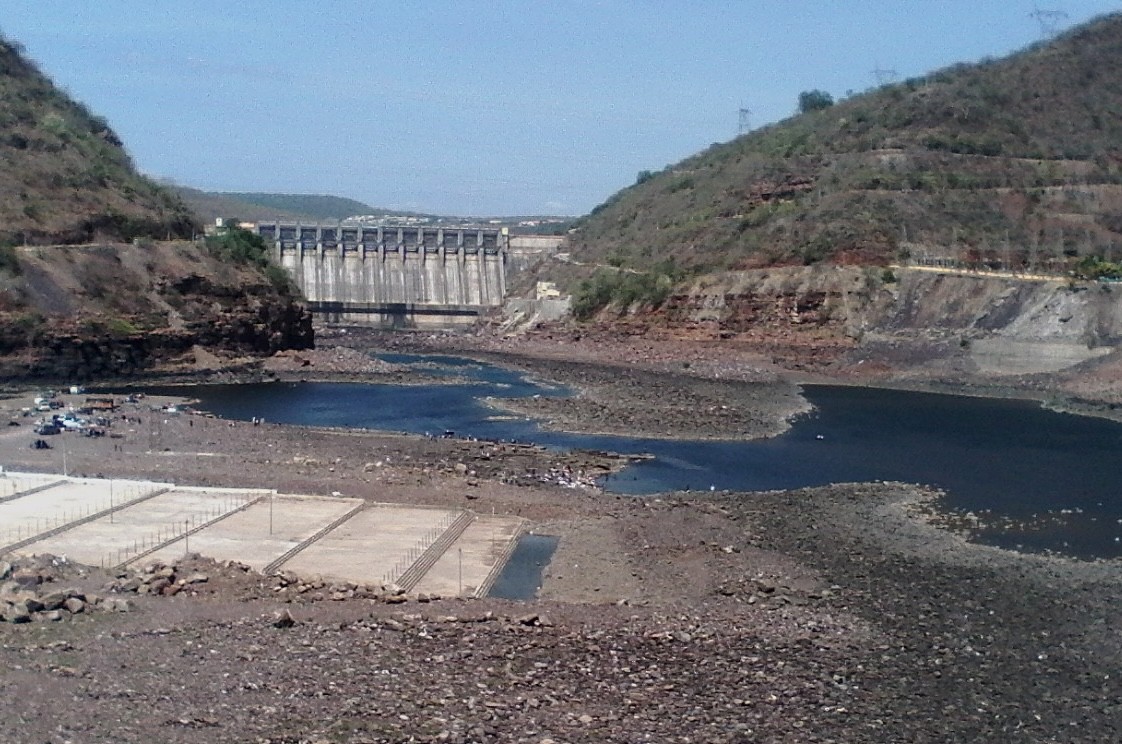
The deleterious impact of rapid industrialization is often felt most by tribals. The Nagarjuna Sagar dam, a key development project in the early days of Independent India, caused a gradual recession of the water table in areas downstream. Wells depended upon by tribals began to dry up, exacerbating the hardship of living in the arid Rayalaseema region. The Polavaram project, a mega-dam being erected on the other side of the Eastern Ghats on the Godavari River, has been entangled in legal and political battles that have cast a shadow of constant uncertainty over the Koyas living in the upstream areas that will eventually become the dam’s backwaters. Many families have left their communities to settle in regions far away, accepting their inevitable displacement, while others are left confused about how long they can stay while the dam’s completion date is perpetually delayed. Some, availing of the compensatory lands given to them in other areas, resettle there only to find them barren until the dam’s completion irrigates them, or unproductive altogether. In any case, the displaced have little recourse. During the years of preparation and filming of Nadhi in this area, communities visibly divided and diverged. Both Nagarjuna and Polavaram illustrate how severely the marginalized are affected when those in power only think of their own interests.
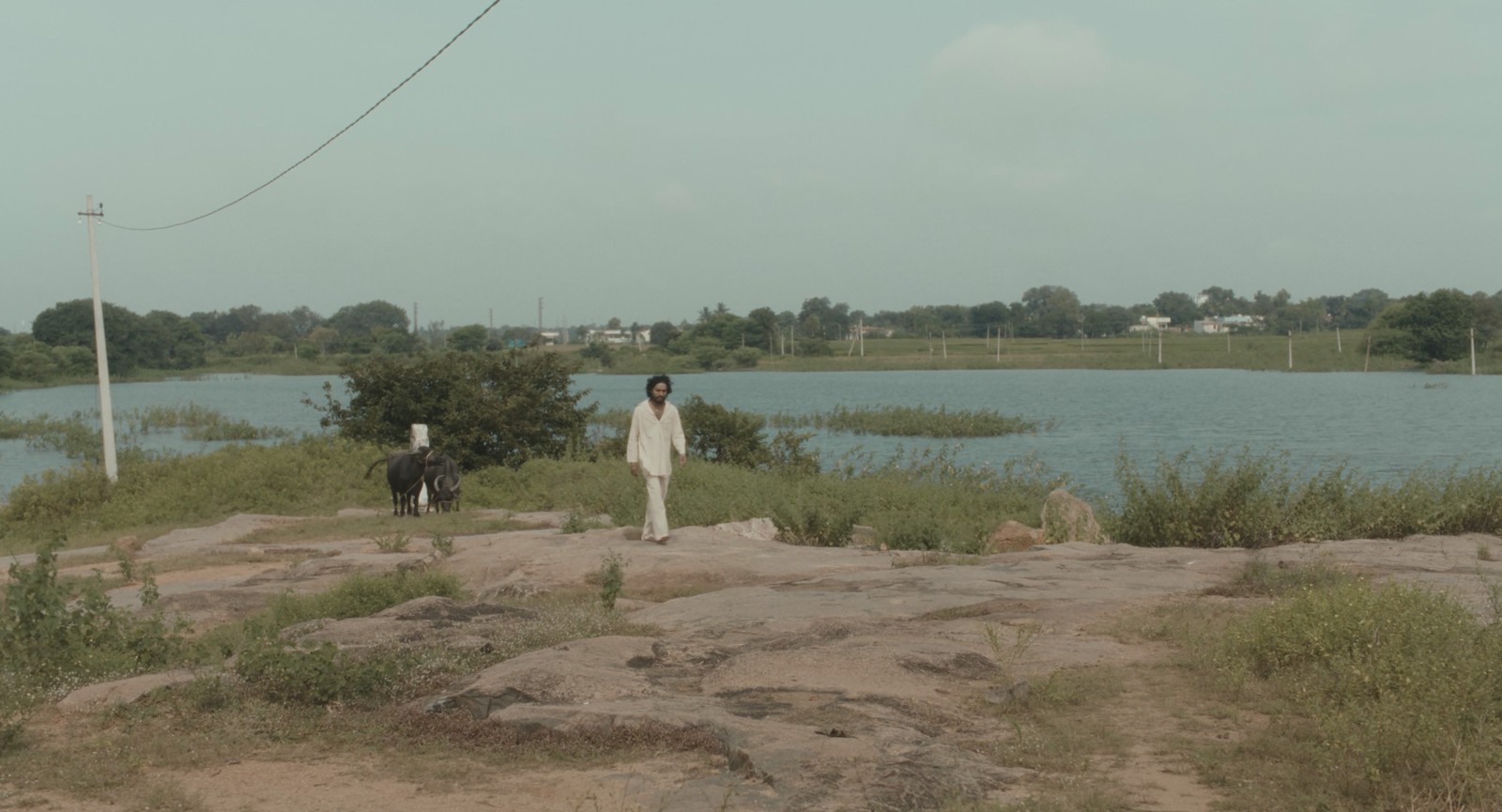
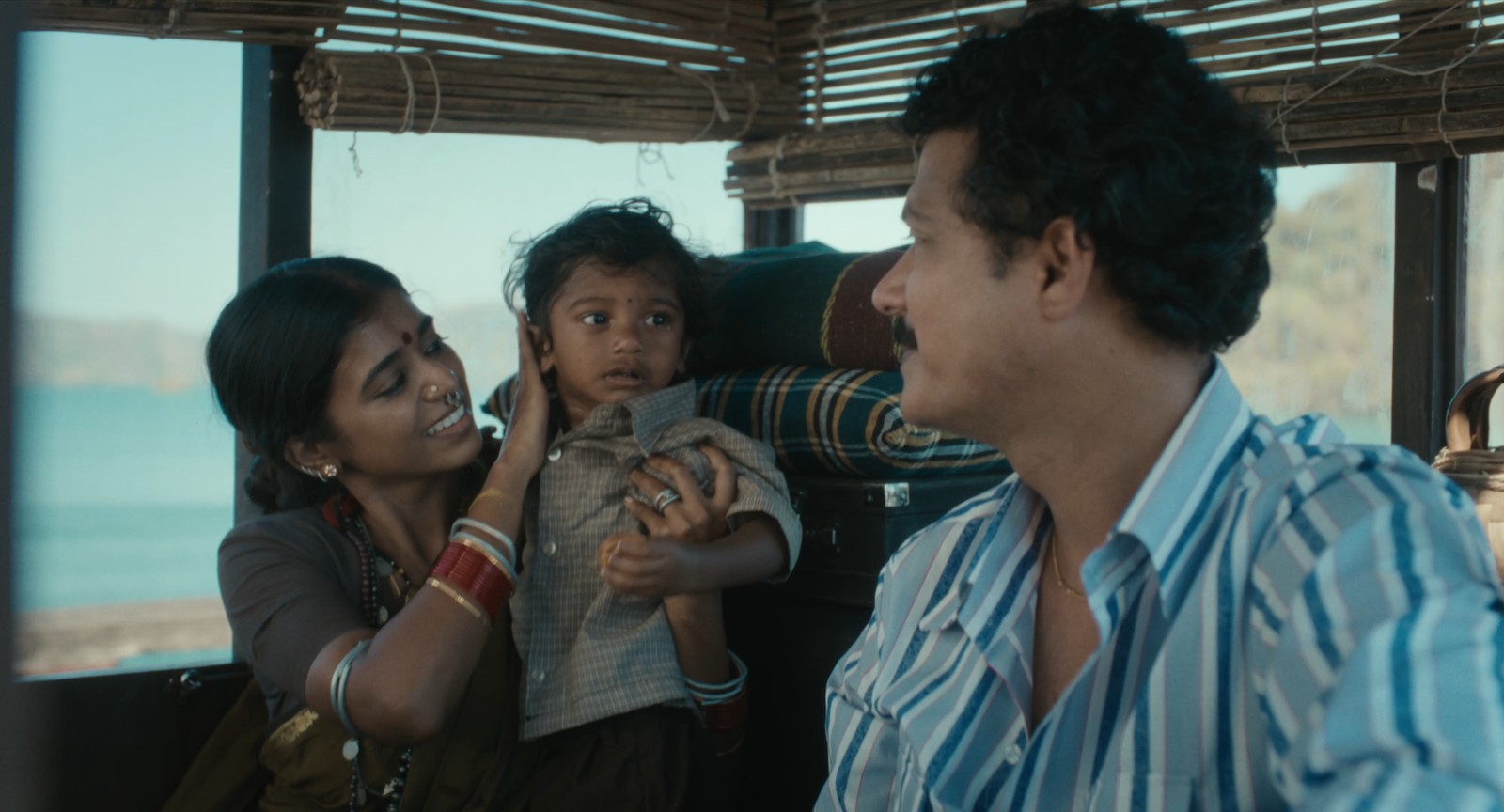
In the film, a dam restricting a river’s flow to villagers living downstream is compounded by drought. The outside world, laden with water and wealth, promises deliverance, but the main characters’ discovery of its true nature upon their arrival in town invites uncertainty about what a future there has in store for them.

Rivers Changing Course
The Koyas experience the passage of time with the coming and going of the rains, animals, and celestial bodies. We understand rain and drought as atmospheric phenomena, while they believe them to be an indication of divine will. The horn of the massive gaur, a sacred object for the Koyas, is blown during prayers before the monsoon for good rain. In specific places known to them, blowing also causes raindrops to fall from the sky due to its sound’s unique reverberations along the trees and mountains. Many of the Koyas’ beliefs are situated at this juncture of superstition and scientific basis. These apparent miracles are a recurring motif in the story.
The osprey, a fish-hunting raptor, was once thought by the Koyas to be a harbinger of rain. During the drought in the film, the ospreys begin to migrate erratically, testing the villagers’ faith in it; a once steady relationship with nature becomes one of confusion and conflict.
The deleterious impact of rapid industrialization is often felt most by tribals. The Nagarjuna Sagar dam, a key development project in the early days of Independent India, caused a gradual recession of the water table in areas downstream. Wells depended upon by tribals began to dry up, exacerbating the hardship of living in the arid Rayalaseema region. The Polavaram project, a mega-dam being erected on the other side of the Eastern Ghats on the Godavari River, has been entangled in legal and political battles that have cast a shadow of constant uncertainty over the Koyas living in the upstream areas that will eventually become the dam’s backwaters. Many families have left their communities to settle in regions far away, accepting their inevitable displacement, while others are left confused about how long they can stay while the dam’s completion date is perpetually delayed. Some, availing of the compensatory lands given to them in other areas, resettle there only to find them barren until the dam’s completion irrigates them, or unproductive altogether. In any case, the displaced have little recourse. During the years of preparation and filming of Nadhi in this area, communities visibly divided and diverged. Both Nagarjuna and Polavaram illustrate how severely the marginalized are affected when those in power only think of their own interests.
In the film, a dam restricting a river’s flow to villagers living downstream is compounded by drought. The outside world, laden with water and wealth, promises deliverance, but the main characters’ discovery of its true nature upon their arrival in town invites uncertainty about what a future there has in store for them.
Land and Exploitation
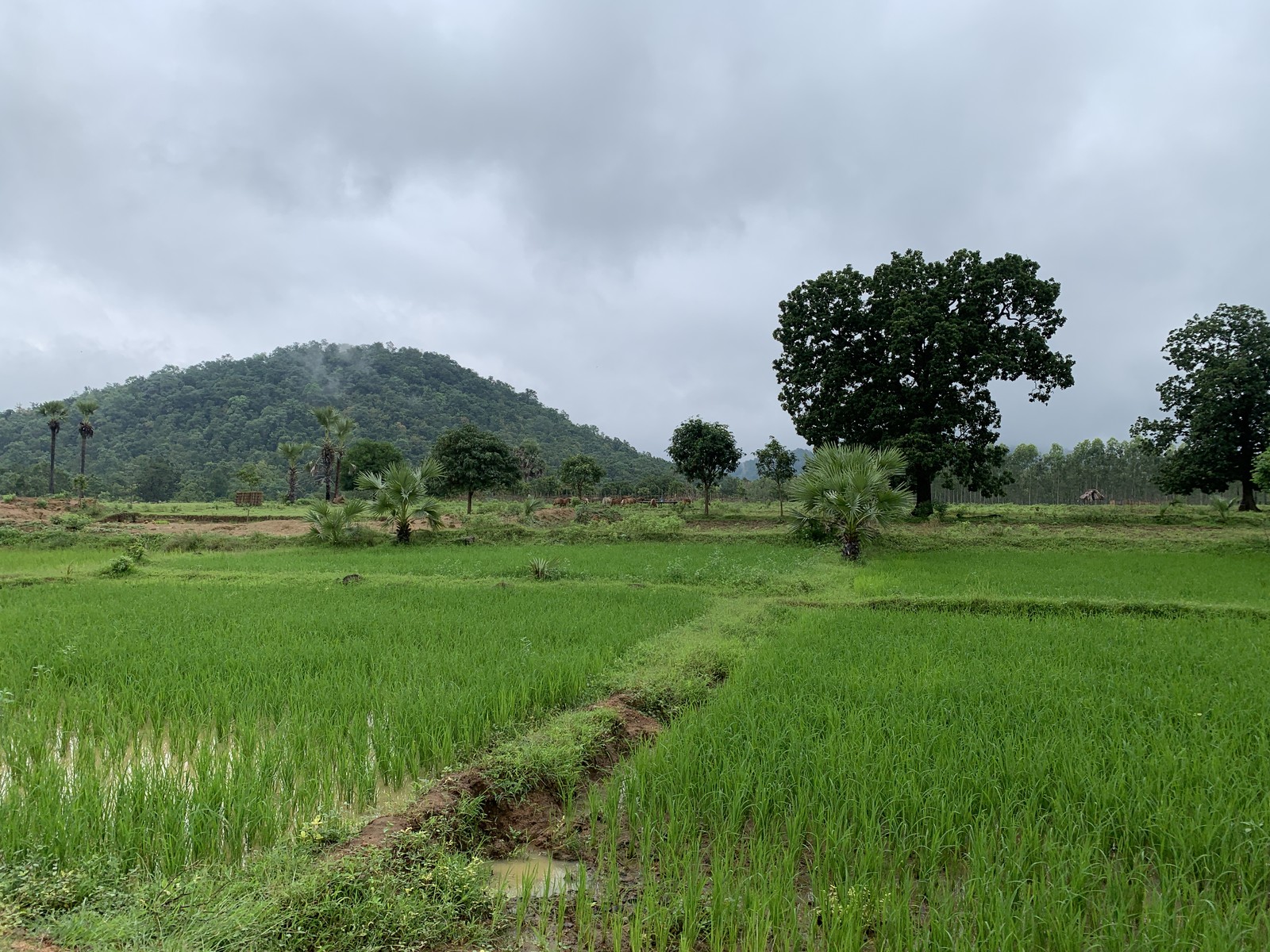
Conversely, outsiders have taken to exploiting mechanisms of tribal compensation and land allotment for their own benefit. In one scheme from recent decades, outsiders, some already having families of their own, settled near tribal areas and took up inconspicuous occupations. Then, they pursued romantic relationships with tribal women who, in name, are entitled by the government to valuable land that non-tribals are prohibited from acquiring. After marrying and fathering a child, the outsider moved with their wife and child far out of reach of their wife’s community. There, after manipulating their wife into transferring their land to their child, legally considered a tribal person, the outsider was able to effectively control their wife’s land for their own benefit. Victims of this scheme were often illiterate and were unfamiliar with their rights and land transfer regulations, and the criminal justice system usually turned a blind eye to what it considered a family and community matter. In the Bhadrachalam area, where the film was shot, locals recounted nearby villages being called the “hunting grounds” by such settlers arriving from the coast. This formed one of the key story threads in the film.
Tribal Medicine
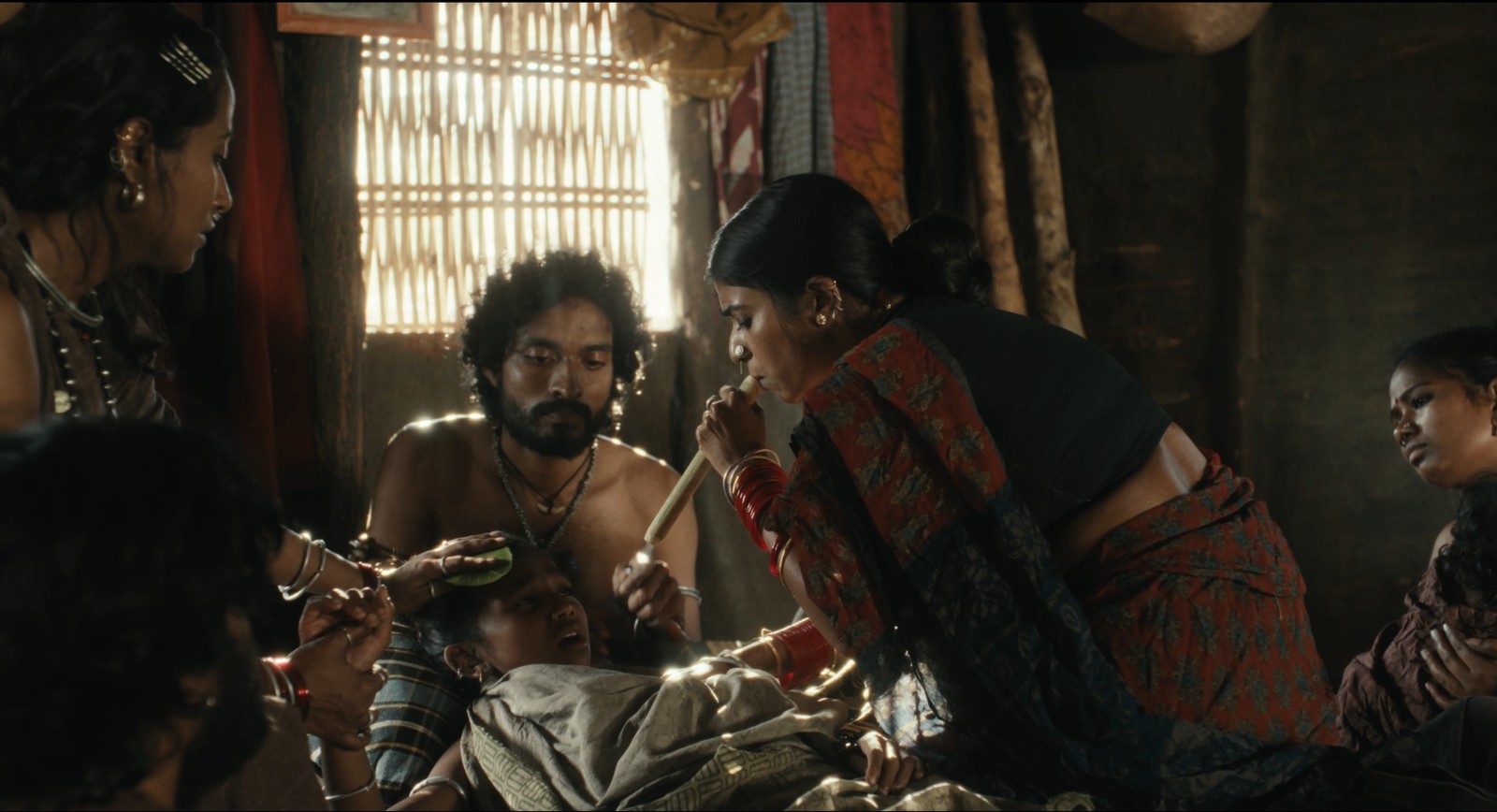
Medicinal plants and remedies in tribal cultures have long been a subject of both fascination and skepticism for anthropologists and doctors alike. As their homeland spans the varying biomes from the eastern edge of the Deccan plateau across the Eastern Ghats to the coastal plains on the other side, the Koyas have used a diverse selection of naturally occurring materials in their traditional medicine. Scientific investigation often discovers the real mechanisms behind these cures. Certain pastes made from pungent forest leaves are used to revive victims of acute shock or loss of consciousness. Such remedies have also caused preventable deaths when administered for ailments they cannot treat. Since the advent of antivenom for venomous snakes abundant in the forest areas the Koyas inhabit, snakebite victims are frequently still treated with folk remedies such as applying a turmeric paste to the wound. Because symptoms often don’t appear immediately, victims believe they have been cured, only to later succumb to the venom. This double-edged sword of Koya tradition, its consequences, and the village’s changing attitudes towards it are a key narrative feature in Nadhi.
Insurgency
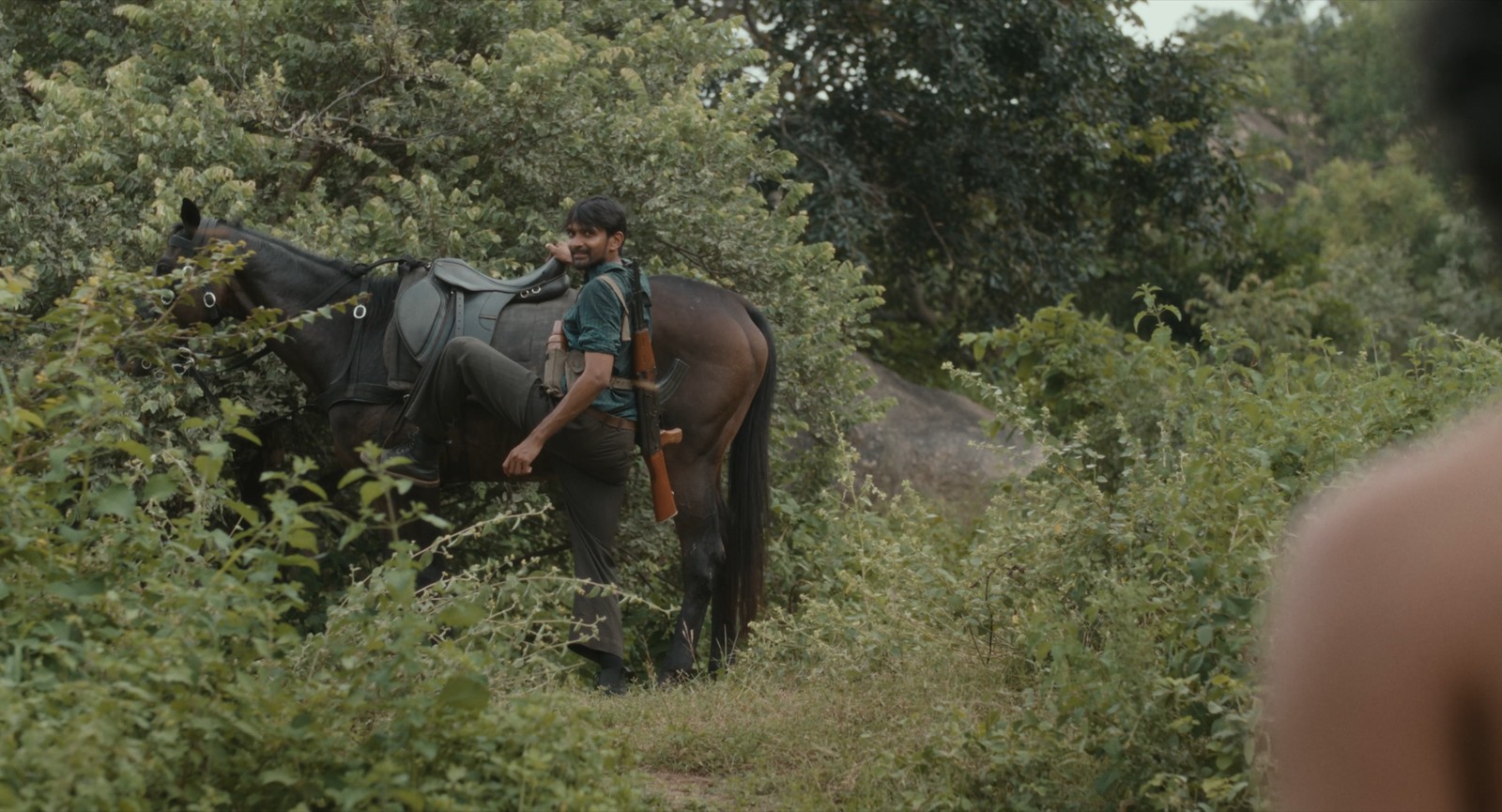
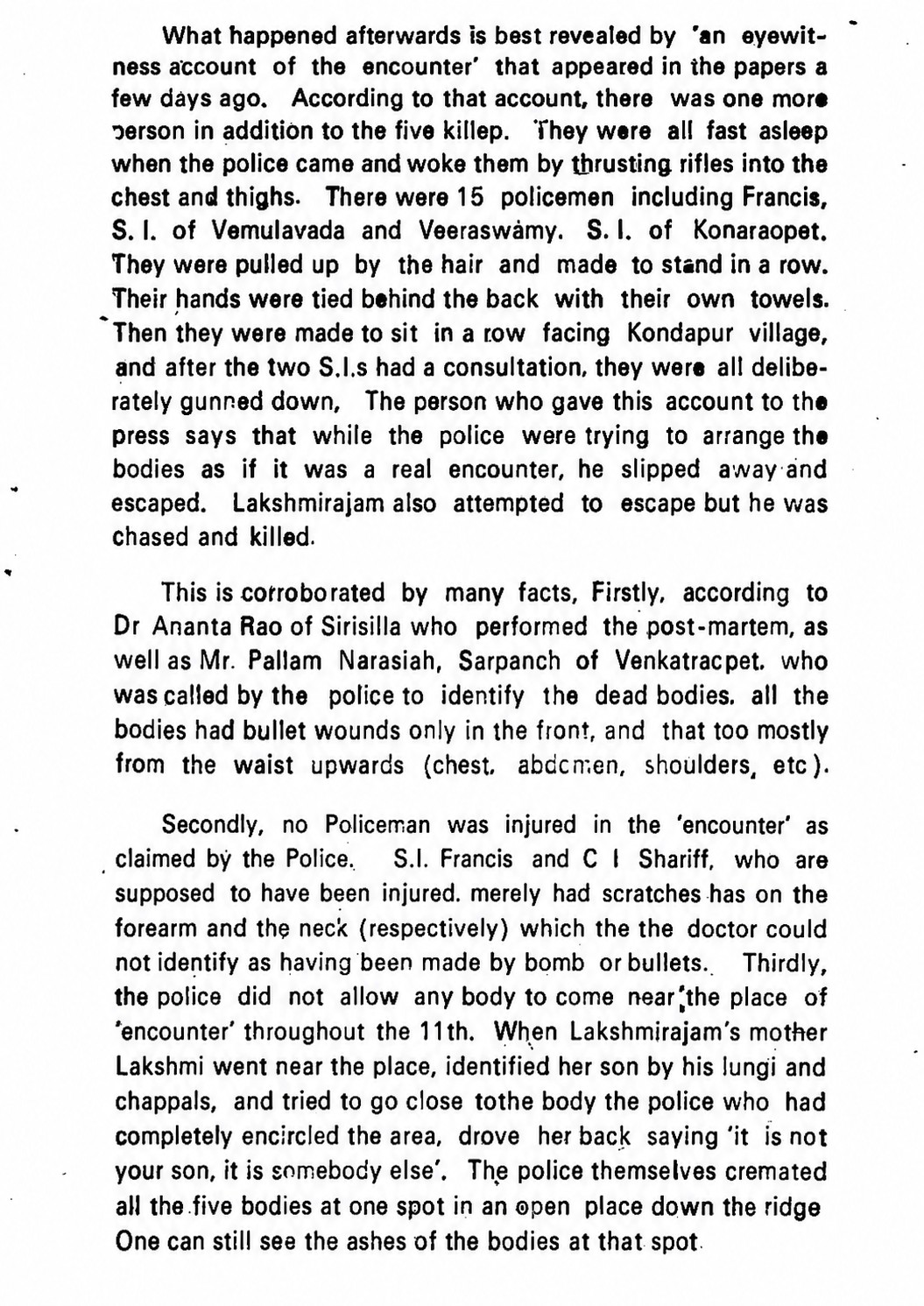
Insurgency movements have found a following amongst tribal people in a state of privation and facing apathy from institutions. Already adapted to living in seclusion and having little to lose when facing the consequences of the law, tribal people have been prime recruits for Marxist-Maoist groups operating in the Eastern Ghats. In their heyday in the last decades of the 20th century, tribal villages were often terrorized by police in “encounter killings”, in which police identified, tracked down, and arbitrarily executed tribal people, usually with dubious evidence linking them to insurgent activity. Little transparency was offered about their investigative processes. Activists documented false flag operations in which police shot victims who they later claimed shot at them first, forcing them to act in self-defense. In one case, after hastily shooting a young man and others in a group, police told the man’s family that the body was not his as the family approached it, before burning the group’s bodies to ashes. Tribal people became all too convenient a scapegoat, caught in the crossfire. In the film, an insurgent leader promises the village liberation from their plight.
Living Systems
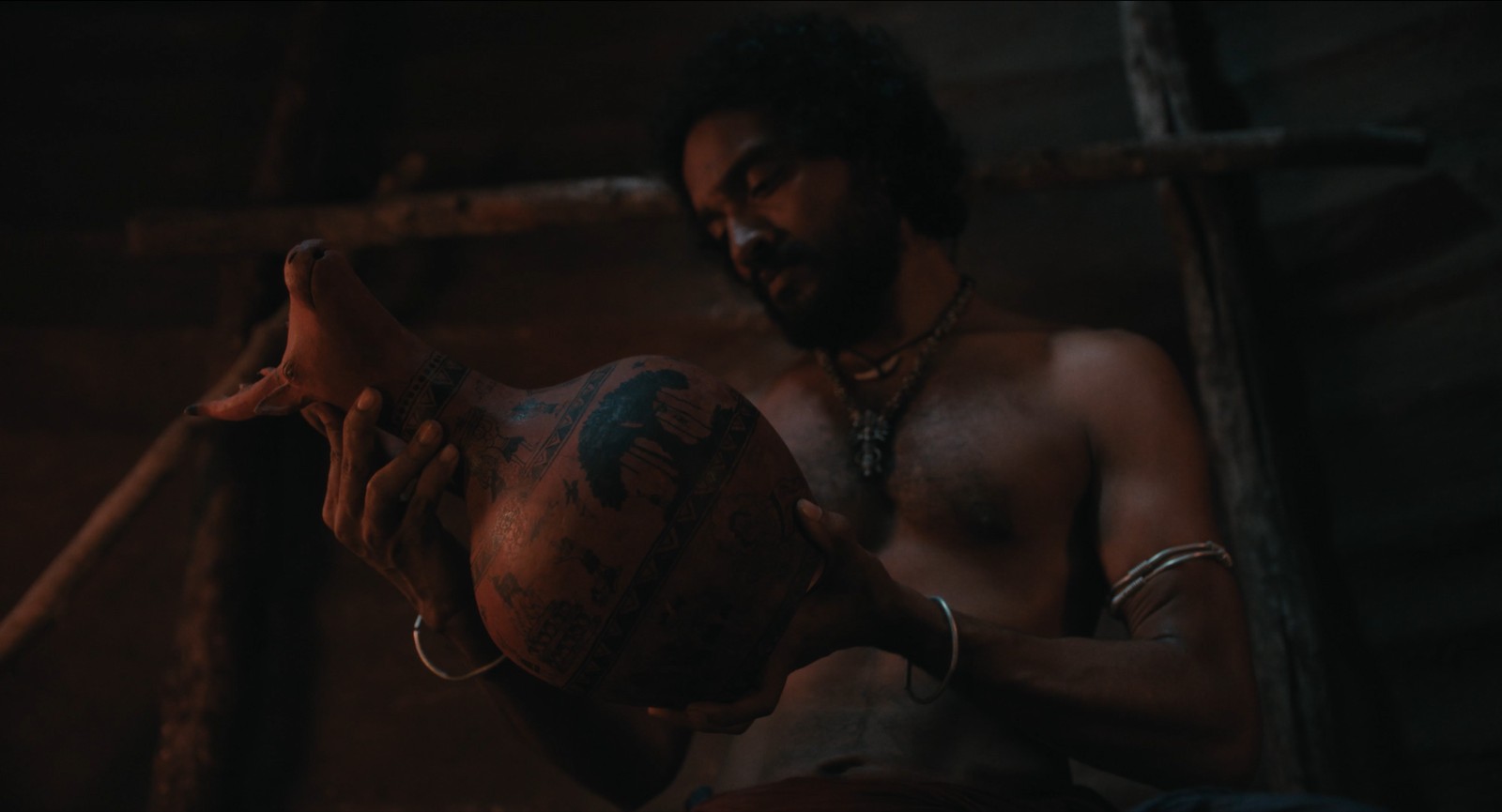
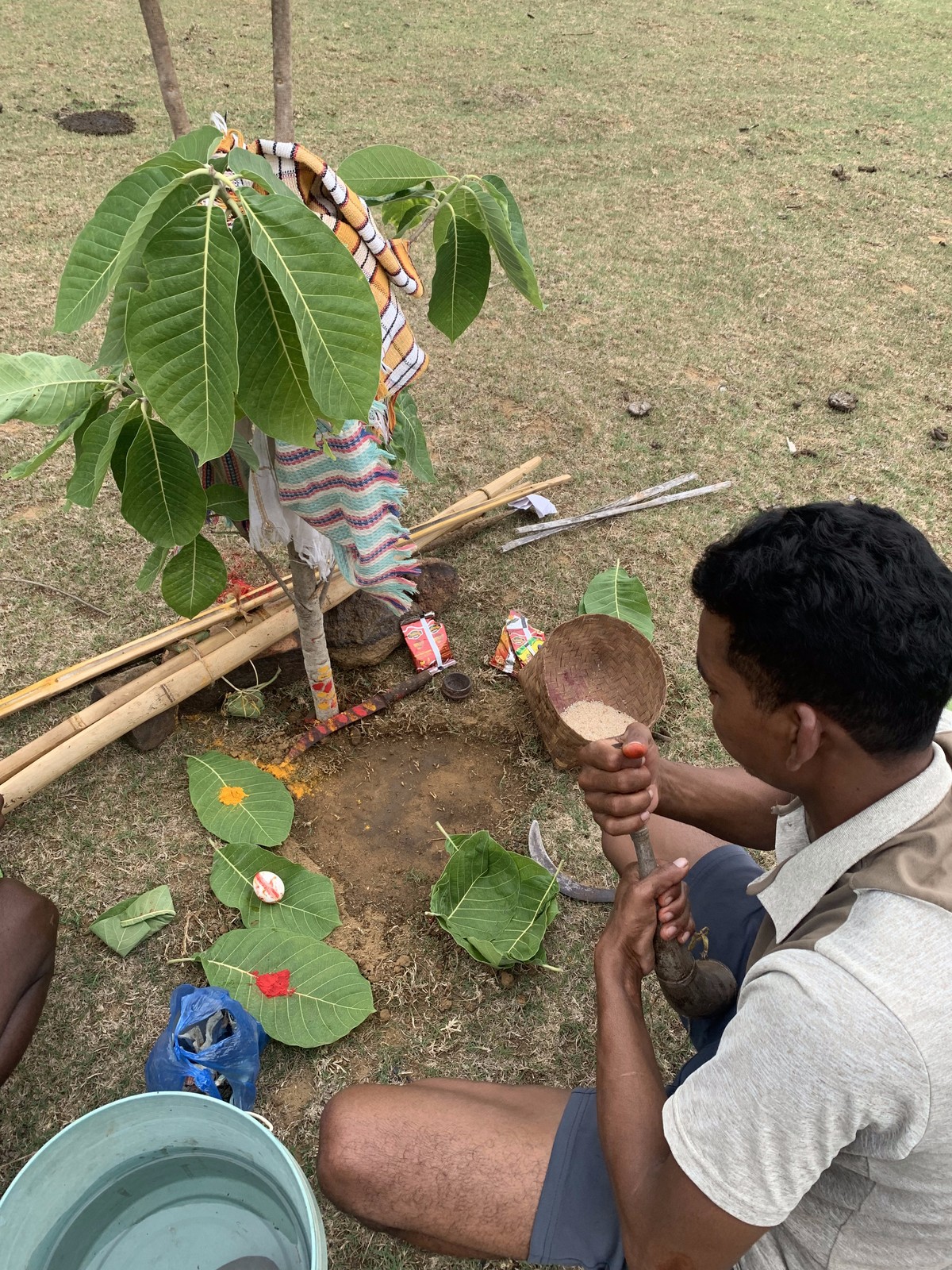
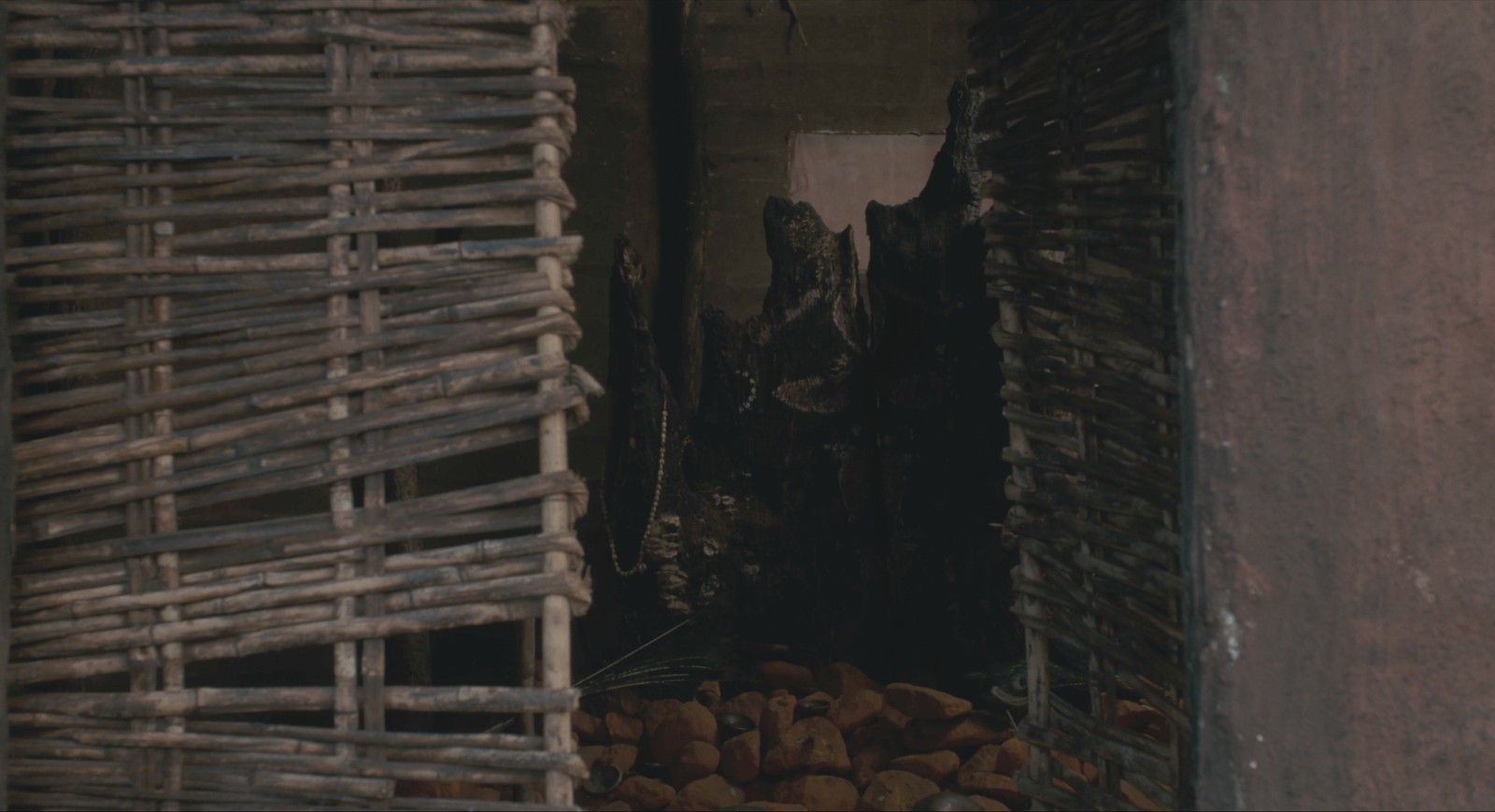
The world of the film is a living system that has largely disappeared today. To evoke it, we relied on traditional knowledge that was still being passed down, even if its practice had changed. Tribal people create idols from tree stumps and stones, believing spirits still inhabit them. With the locals, Sushant, our production designer, fashioned an immense tree stump into an idol and built a shrine around it. This became the foundation of the village.
The presence of the wealthy Narsing Rao from town in the story also offered us an opportunity to capture the town’s material influence entering the village. Karuna lives in a brick house, while the others live in thatch huts. In one scene after his arrival in the village, a group can be seen quarreling over the gifts he has brought them.
Nadhi: The River
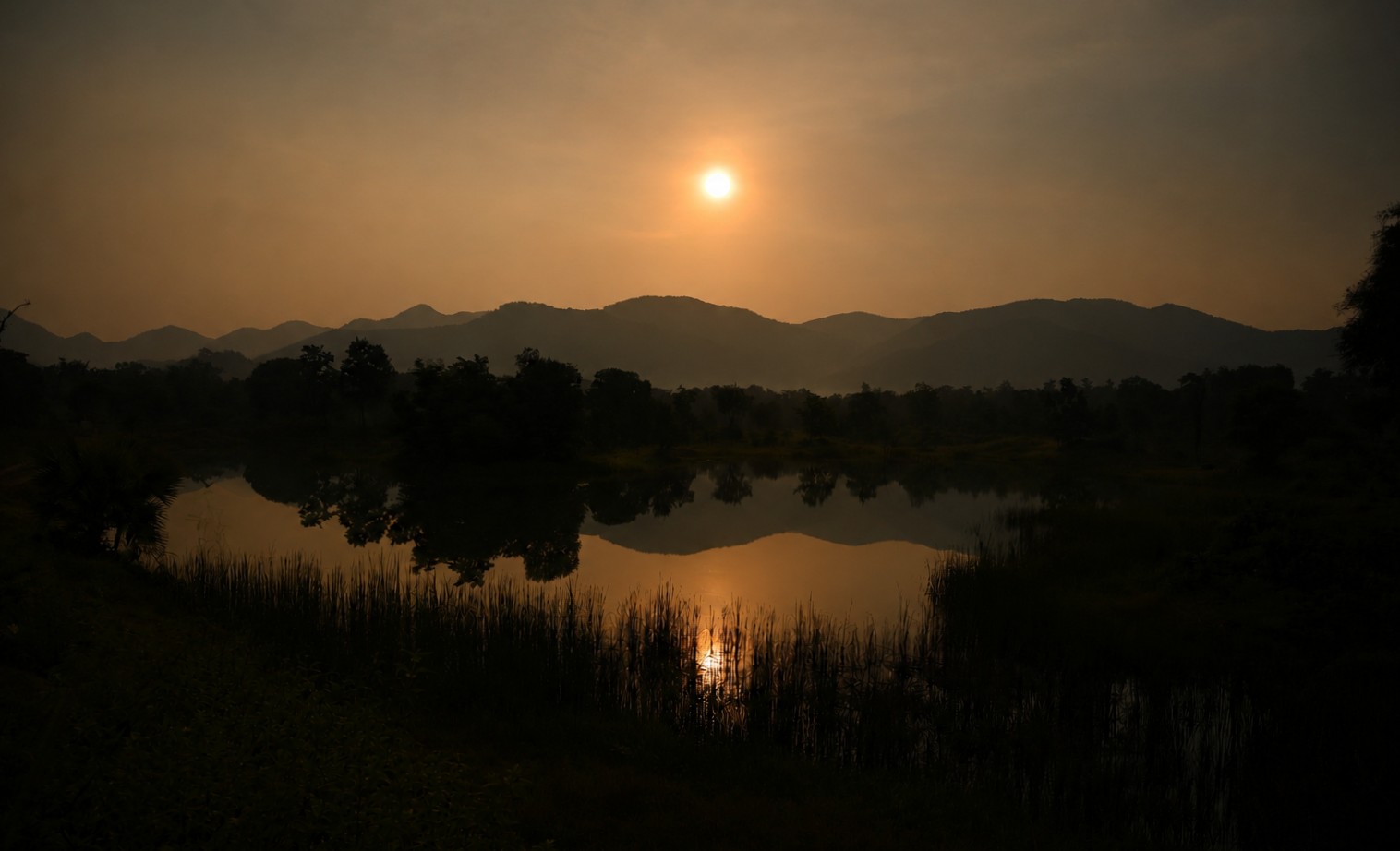
The film depicts a turbulent past that has shaken the foundations of longstanding tribal ways of life. Its world emerged from the contributions of a team from diverse backgrounds who came together with a shared belief in its value. While change is constant and uncertain, the process of creation sparked in everyone who participated an overwhelming sense of hope for what lies ahead. Nadhi means river in Telugu. A river’s course cannot be negotiated with. It floods and dries, but in the end, always gives life.
Sources:
Umamaheshwari, R. When Godavari Comes: People’s History of the River Journeys in the Zones of the Dispossessed. Aakar Books, 2014.
Balagopal, K. “Tribal Land Alienation: The Law and the Courts.” Land Rights of Adivasis in Andhra Pradesh, 2004.
Balagopal, K. “Encounter Killings in Andhra Pradesh: Excerpts From Reports of A.P. Civil Liberties Committee.” 1986.
Director's Statement దర్శకుని దృష్టి
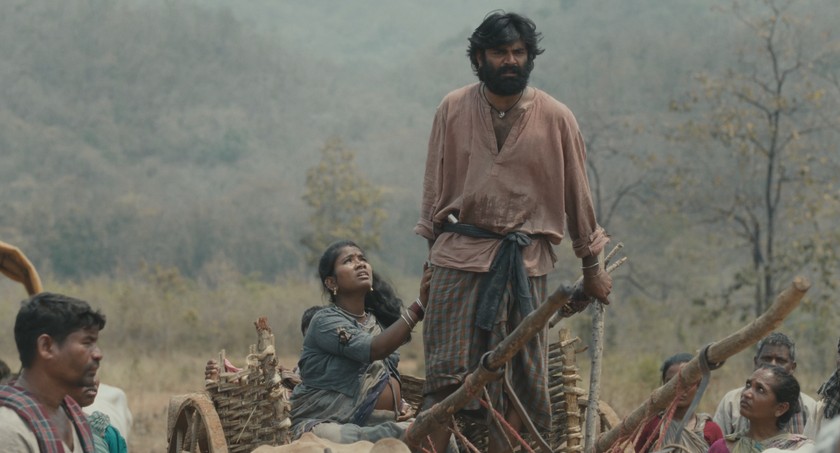
As I travelled my native India to develop Nadhi, I saw my country in transition: siblings in once tight-knit extended families now divided over their inheritance and land; systems built for the collective good exploited by the few for personal gain; formerly vast forests painted over by sprawling urbanization and industry. I found myself isolated, yearning to recover what was being lost. Yet, as I saw those around me stray further from the ideals of the past, I questioned why I longed so much for its return.
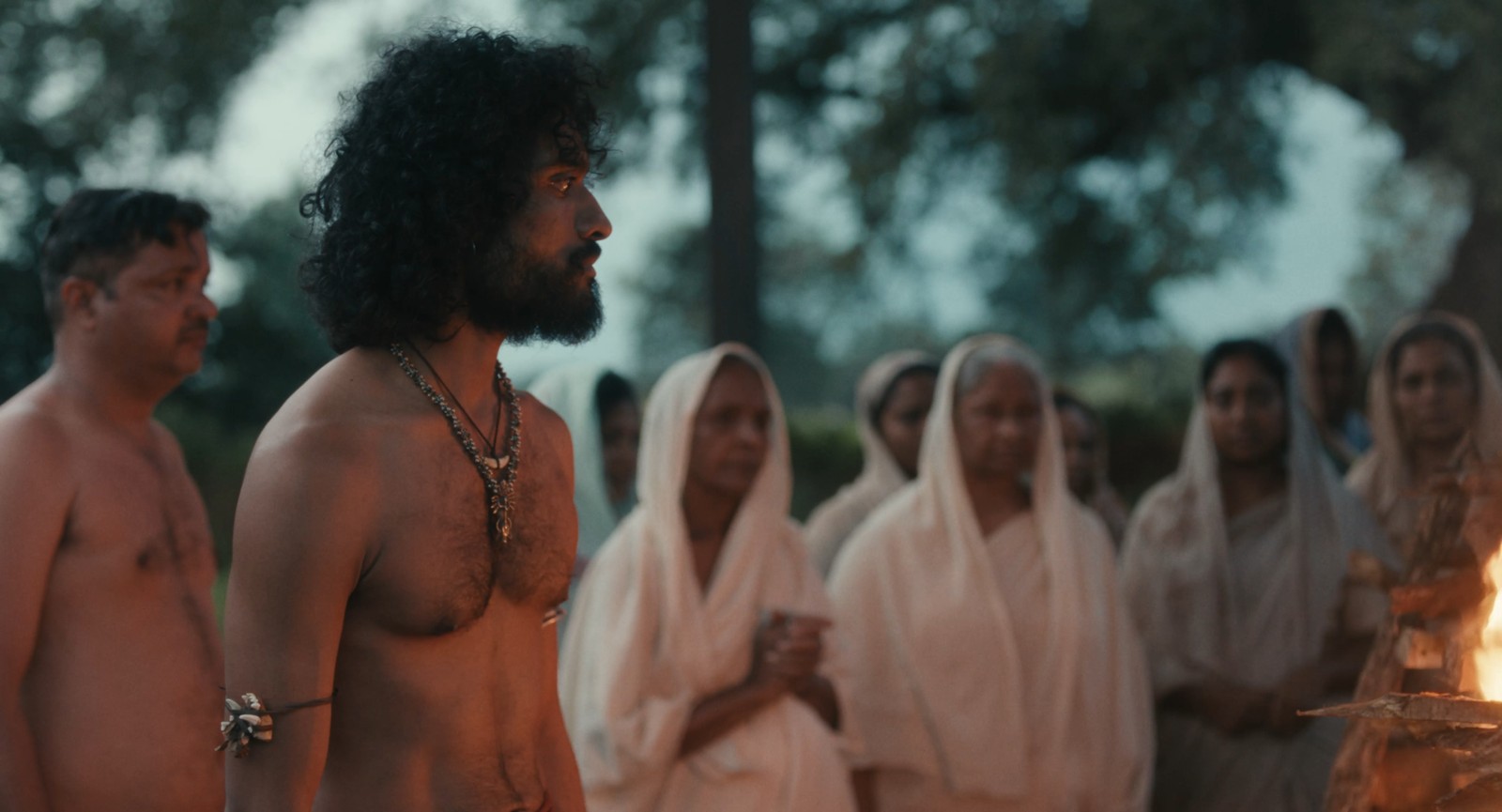
Shankar, the film's protagonist, was born from this crisis of faith. Each juncture of the story sees his moral fibre, bound inextricably to his people's traditions, challenged by the scrutiny of the world around him. His convictions lead him to commit grave mistakes that drive his people away from him and their traditions alike. Eventually, his mere existence seems to be a crime. I conceived the story to examine how moral values erode under the pressure of changing times, and as a dream of our redemption and reformation.
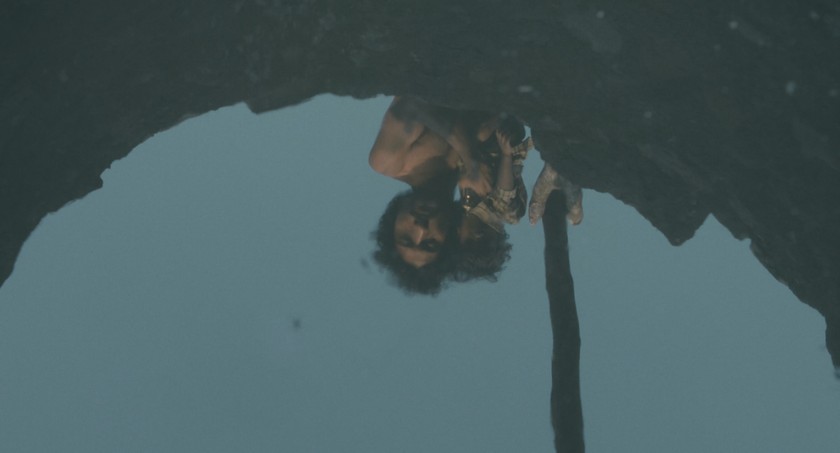
To develop the story, I spent time living with the Koyas of the Bhadrachalam and East Godavari forests, near the towns on India's east coast to which I trace my roots. The story's central metaphors arose from what I observed during my travels. Towering palm trees are climbed each day to collect toddy sap, a key ingredient in a trance-inducing hallucinogen. After preparing it and imbibing, the user climbs the palm tree again to ascend into the spirit world to seek divine guidance. Meanwhile, the well's dwindling water is a mirror of the harsh material reality below.
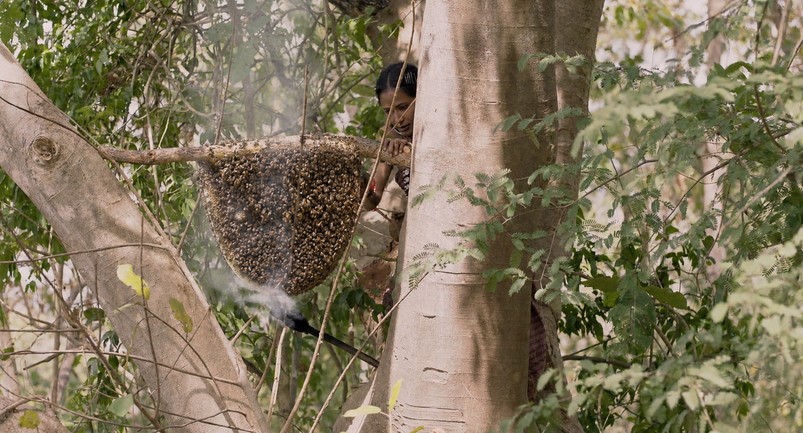
Many of the Koyas I lived with, particularly the children, appear alongside trained actors in the film. Before production, the cast spent time together in the areas I travelled, gathering cultural details like ritual practices and folk music that made their way into the film. The cast practiced using artifacts of the past, like ploughs, bullock carts, and wooden rowboats, which have largely been supplanted by modern machines. Many of these objects that had vanished altogether were built by Sushant and the art team.
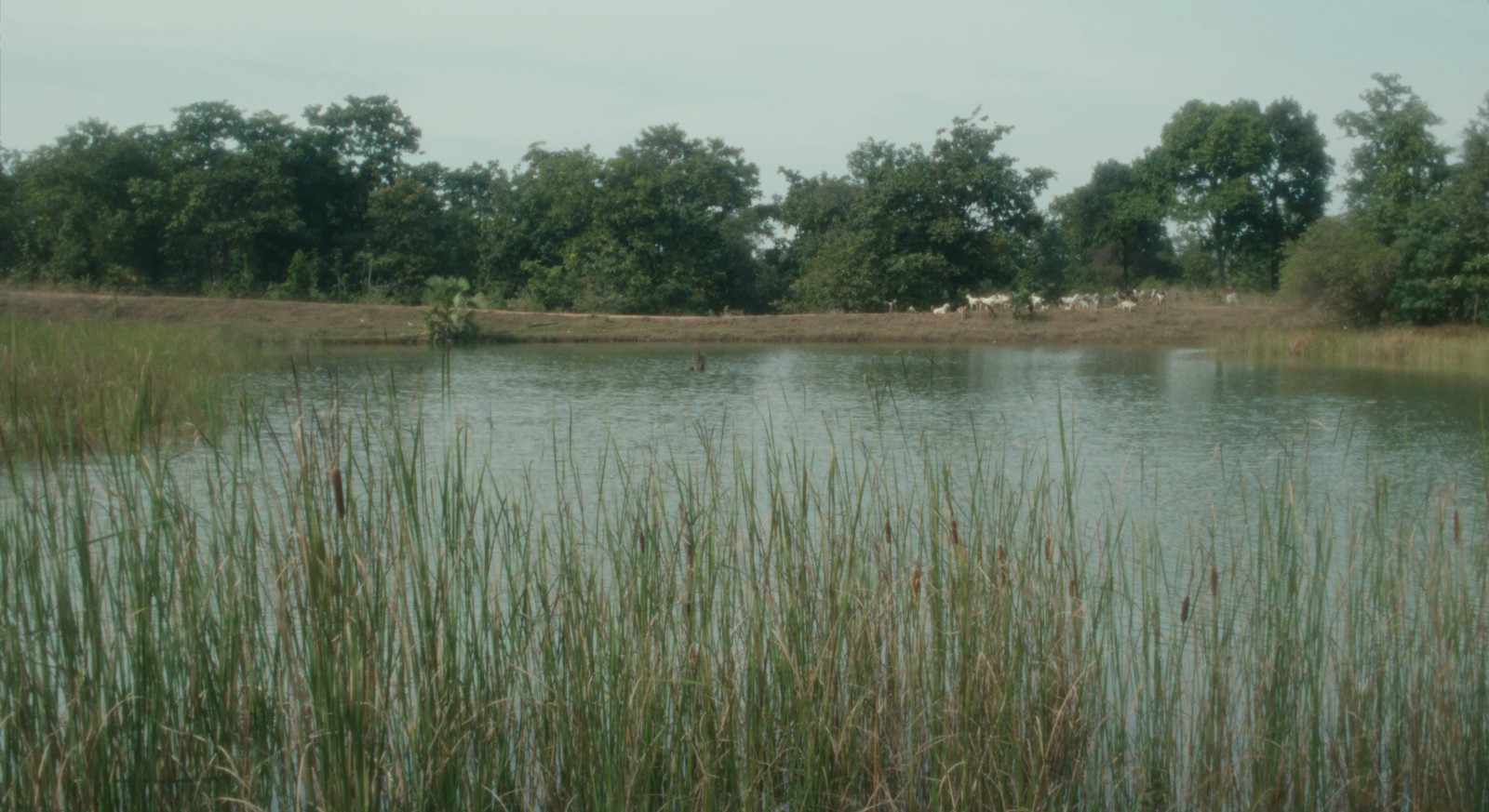
The world of Nadhi spans the village in the forest, the spirit world of the skies, and the town on the other side of the dam, where water is seemingly plentiful even during the drought. During pre-production we ventured with locals to the most remote pockets of wilderness that the story required, where we were humbled to discover that the natural wonders we feared were gone still persisted. A study suggested that the colossal banyan tree at the heart of the spirit world was 400 years old.
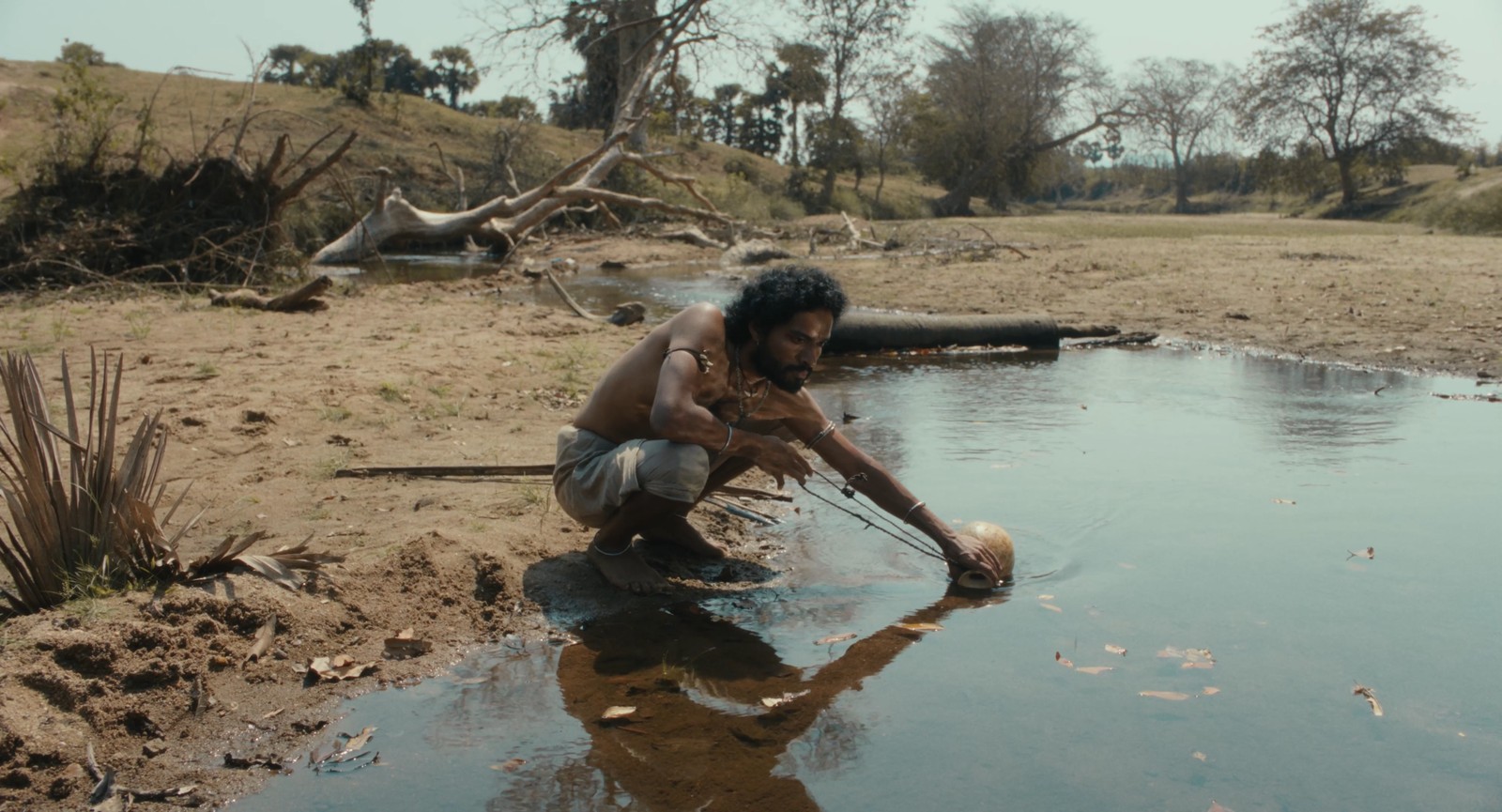
To give form to the past and present timelines of the story, the film was shot in four schedules over the span of a year, revisiting the same locations as seasons changed. A stream that ran full reduced to a trickle, and a lush forest became dusty scrubland.